


Heat Pump Installation in Palm Desert, CA
Heat Pump Installation in Palm Desert, CA
Switching to a modern heat pump is one of the most effective ways to improve year round comfort and reduce energy costs in Palm Desert, CA. We help you understand the complete new-install process so you know what to expect from the initial site assessment through startup testing and long term maintenance. The information is tailored to Desert living where extreme daytime heat, cool nights, and dust influence equipment selection, sizing, and installation practices.
.webp)
Why install a heat pump in Palm Desert
Palm Desert homes face very high cooling loads for much of the year and occasional needs for heating during cool winter nights. A properly designed heat pump delivers efficient cooling in summer and balanced heating in winter while offering:
- Higher seasonal efficiency compared with older split systems
- Better dehumidification control during monsoon and transition seasons
- Year round comfort with one integrated system
- Lower operating costs when sized and installed correctly for local conditions
Common reasons homeowners in Palm Desert choose a new heat pump
- Old equipment failure or repeated repairs
- Wanting lower utility bills and improved SEER/HSPF performance
- Replacing an air conditioner with a heat pump for year round heating
- Remodeling, adding insulation, or changing living space that changes load requirements
- Desire for zoning, smart thermostat integration, or quieter operation
Initial site assessment and load calculations
A reliable installation starts with an on site assessment and a professional load calculation. Key steps:
- Inspect the home layout, orientation, window exposure, insulation levels, attic ventilation, and existing ductwork condition.
- Perform a Manual J load calculation (or equivalent) to determine precise cooling and heating loads using local weather data for Palm Desert. This accounts for high solar gain on west and south exposures and large daytime temperature swings.
- Check the electrical service, breaker capacity, and location for outdoor unit placement with respect to noise, airflow, and sun exposure.
- Evaluate ductwork for static pressure, leakiness, insulation, and whether modifications or additional returns are required.
Accurate sizing is essential. Oversized systems cycle frequently, increasing wear and reducing dehumidification. Undersized systems struggle on the hottest days. In Palm Desert, sizing must consider both extreme summer peaks and benefit from efficient operation on mild winter nights.
System selection and sizing for the local climate
When choosing equipment for Palm Desert, consider:
- Seasonal efficiency ratings: SEER (cooling) and HSPF or HPWH metrics (heating). Higher ratings return more energy savings over time in a hot climate.
- Variable speed inverter compressors provide better humidity control, quieter operation, and improved part load efficiency, which is beneficial given the long cooling season.
- Correct capacity based on Manual J results, not rule of thumb. Account for attic heat gain, window shading, and building envelope improvements.
- Equipment features like high ambient cooling capability, improved coil coatings for dust resistance, and factory matched indoor coils for refrigerant compatibility.
Ductwork and thermostat integration
Ductwork and controls determine whether a high performance heat pump actually delivers comfort and efficiency:
- Seal and insulate ducts to minimize leak-related energy loss and reduce the amount of hot desert air being drawn into the system.
- Balance airflow and adjust registers to match required CFM for each zone.
- Consider zoning for multi level or open plan homes to avoid overconditioning unused spaces.
- Install a compatible programmable or smart thermostat that supports heat pump control logic, auxiliary heat staging, and remote scheduling. Proper thermostat configuration reduces unnecessary cycling and ensures correct heat pump operation.
Permits and inspection handling
Local permits and inspections are part of a compliant installation:
- Obtain the necessary building and mechanical permits required by the City of Palm Desert or Riverside County.
- Prepare documentation including load calculations, equipment specifications, and electrical plans for the permit application.
- Coordinate municipal inspections for electrical work, refrigerant lines, and final mechanical hookup. Passing these inspections ensures the system meets code and preserves equipment warranties.
Professional installation steps
A professional installation typically follows these stages:
- Job site preparation and equipment staging: place pads, line sets, and electrical supplies.
- Safe removal of the old system and disposal per local regulations.
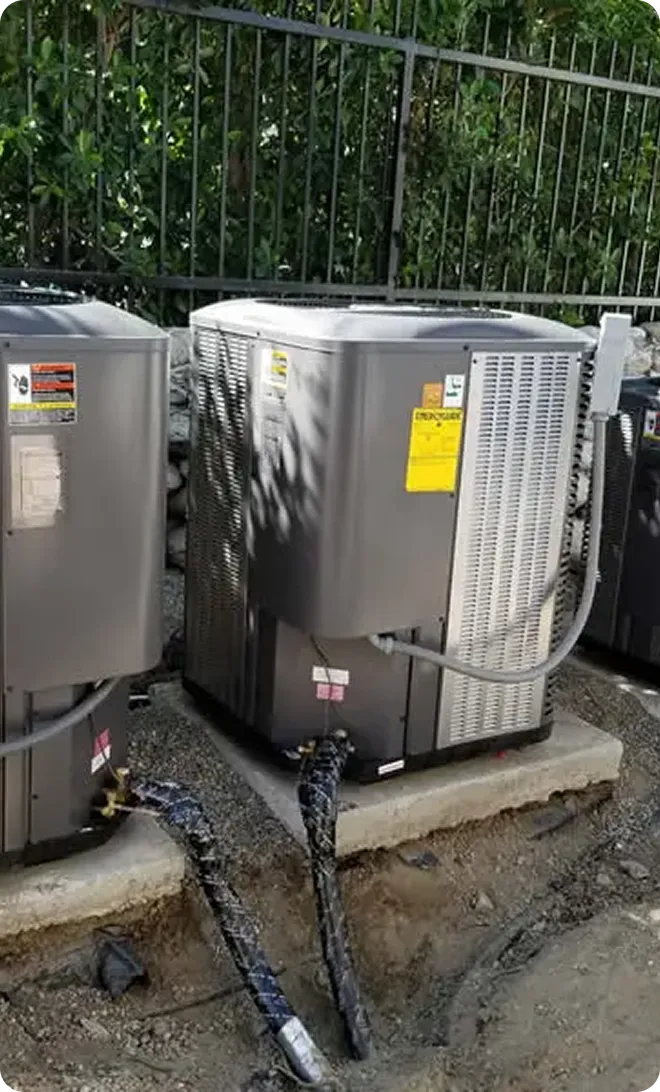
- Install outdoor condensing unit and indoor air handler or coil, mounting on vibration isolators and proper pads.
- Run and insulate refrigerant lines, install condensate drain, and complete electrical connections to the service panel and disconnect.
- Integrate controls and thermostat wiring, and complete any necessary duct modifications or return installations.
- Evacuate and charge the refrigerant circuit per manufacturer specifications, ensuring proper pressures and charge.
Each step includes quality checks for airflow, electrical safety, and mechanical fastening to resist the stresses of high daytime temperatures in the desert.
Startup, performance testing, and commissioning
Commissioning confirms the system performs as designed:
- Verify correct refrigerant charge, compressor amperage, and operating pressures for both cooling and heating modes.
- Measure supply and return air temperatures and calculate temperature split to evaluate cooling performance.
- Test airflow and static pressure to confirm ductwork modifications are effective.
- Check electrical connections, safety controls, and defrost cycle operation.
- Ensure thermostat programming and staging are optimized for Palm Desert usage patterns.
Documentation of test results and manufacturer checklists provides a record for warranty and future service needs.
Orientation and maintenance recommendations
Homeowner orientation makes ongoing performance predictable:
- Review basic operation, thermostat programming, filter access and replacement frequency, and app or remote controls if installed.
- Explain warning signs to watch for: reduced airflow, unusual noises, rising energy use, or inconsistent room temperatures.
- Establish a maintenance schedule: at minimum a spring cooling tune up and fall heating check. In Palm Desert, quarterly or semiannual filter and coil checks help manage dust and sand buildup.
- Recommend filter upgrades and attic insulation or shading improvements to sustain efficiency.
- Provide paperwork for warranties, permit finalization, and commissioning reports.
Long term benefits and common local issues to monitor
A correctly installed heat pump yields:
- Lower seasonal energy costs and improved comfort during long cooling seasons
- Cleaner indoor air and better humidity control
- Reliable year round performance with appropriate maintenance
Common Palm Desert issues include high dust and sand loading that can clog coils and outdoor fins, intense solar gain on west facing walls that raise cooling loads, and rooftop or soffit ventilation challenges. Proactive filtration, regular coil cleaning, and scheduled HVAC inspections prevent performance loss and extend equipment life.

hear what our satisfied
clients have to say




.webp)